Begin With The Question Being Asked
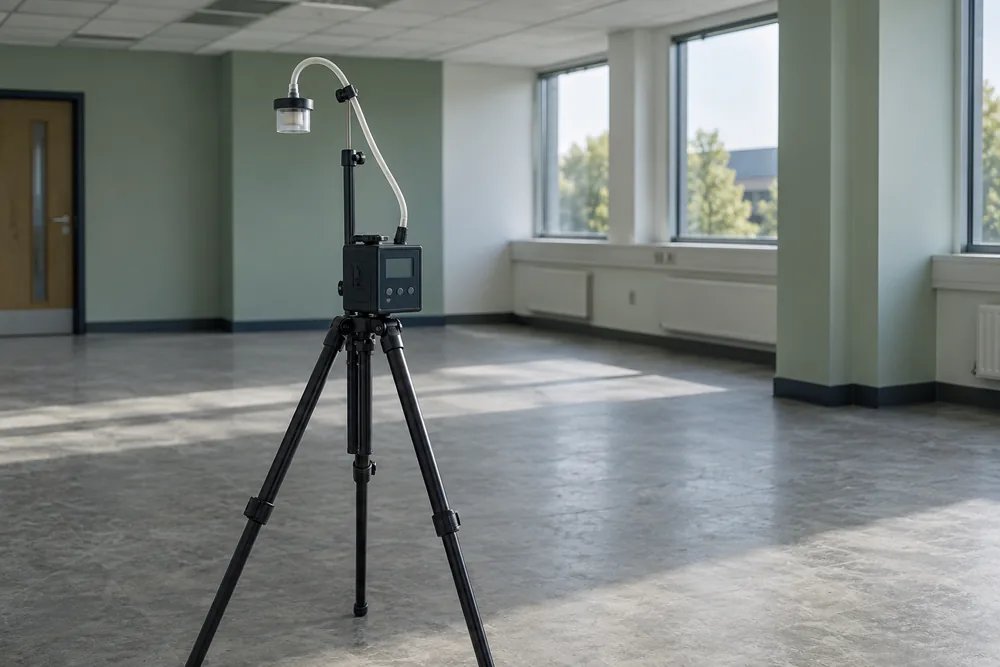
Air monitoring can be used for different purposes, including assessing exposure during work, checking conditions around a controlled work area or contributing to a clearance process. Those purposes affect where samples are taken, how sampling is undertaken and how the result should be interpreted. A generic air test request may leave the purpose unclear.
Tell us whether you are planning removal, responding to a disturbance or reviewing an occupied area. Provide the survey and work method where available. The analyst needs to understand the material and activity as well as the building layout, access arrangements and timing of the concern.
Use The Right Analytical Competence
HSE states that asbestos air monitoring must use an analyst working for a UKAS-accredited analytical laboratory. Accreditation to ISO/IEC 17025 is required for the relevant analytical work. Check the laboratory’s current scope and confirm it covers the monitoring and any clearance role being commissioned.
HSE’s HSG248 guidance for asbestos analysts provides the technical framework. The Control of Asbestos Regulations 2012 sets the wider requirements for assessing and controlling asbestos exposure. A result must be interpreted alongside the sampling conditions, work activity and limitations of the analytical method.
Air Testing Is Not A Building Survey
An air sample does not locate hidden asbestos-containing materials in walls, ceilings or floors. Low measured fibre levels during a quiet sampling period do not establish that future drilling or strip-out will be safe. The building and proposed works still need appropriate asbestos identification and survey coverage.
Material testing answers a separate question about whether a sampled product contains asbestos. For a suspected damaged board, the initial response may need a competent site assessment, safe material sampling and controls on access. Ordering an air sample alone can leave the source and extent of the problem unresolved.
Clearance After Relevant Removal Work
For licensed enclosure work where the formal clearance procedure applies, the analyst assesses more than an air sample. The staged process includes checking the work area and a detailed visual assessment as well as air testing and the final assessment after the enclosure is dismantled. The whole sequence matters.
Arrange analytical attendance early enough for the removal programme and clarify who appoints the analyst. The contractor and client need to understand what must be ready before assessment can start. A failed visual inspection cannot be turned into a successful clearance by requesting an air sample instead.
Make The Result Usable
The report should explain the sampling purpose, locations, conditions and results in context. Ask for sample references and a clear description of the activity taking place during monitoring. Keep any certificate for reoccupation with the wider project records where the clearance procedure applies.
For an incident, an analyst’s result is one part of deciding what happens next. It does not replace identifying the source, assessing possible spread or carrying out suitable cleaning and other controls. Reoccupation decisions should follow a competent assessment of the whole situation and the evidence relevant to it.
How The Process Works
Set The Purpose
Explain the removal stage, workplace concern or incident being assessed.
Agree The Sampling
Confirm locations, site access, activity and the accredited analytical scope.
Monitor And Assess
Carry out the agreed monitoring and relevant visual or clearance checks.
Review The Evidence
Use the report in context and retain any required reoccupation certificate.
How Is Asbestos Air Monitoring Priced?
Air testing cost depends on the monitoring purpose, sample locations, sampling duration, site conditions and the need for a staged clearance visit. Out-of-hours work and revisits after incomplete preparation can affect the programme. Provide the removal method, enclosure details and expected handback arrangements so the quotation covers the actual analytical work needed.
Your Questions, Answered
Will An Air Test Find Hidden Asbestos?
An asbestos air test will not find hidden asbestos inside building materials. It measures fibres in sampled air under specific conditions. A building survey and material analysis answer different questions about products that may be disturbed.
Do not use a reassuring air result as permission to drill, cut or strip out unsurveyed construction.
Is Clearance Just An Asbestos Air Test?
Asbestos clearance is more than an air test where the formal staged procedure applies. It includes checks of the work area, a detailed visual inspection, air testing and a final assessment after enclosure removal. Agree the required procedure and independent analyst’s role before removal starts so the programme includes every relevant stage.
Can Air Testing Follow An Accidental Disturbance?
Air testing may form part of an assessment after an accidental asbestos disturbance, but the immediate priority is stopping work and restricting access to the affected area. A competent assessment should consider the source, possible spread and required controls. The monitoring purpose and timing need to be agreed rather than relying on a standalone sample.
Related Next Steps
See our Derby and nearby service areas or send the building details for a scope discussion.