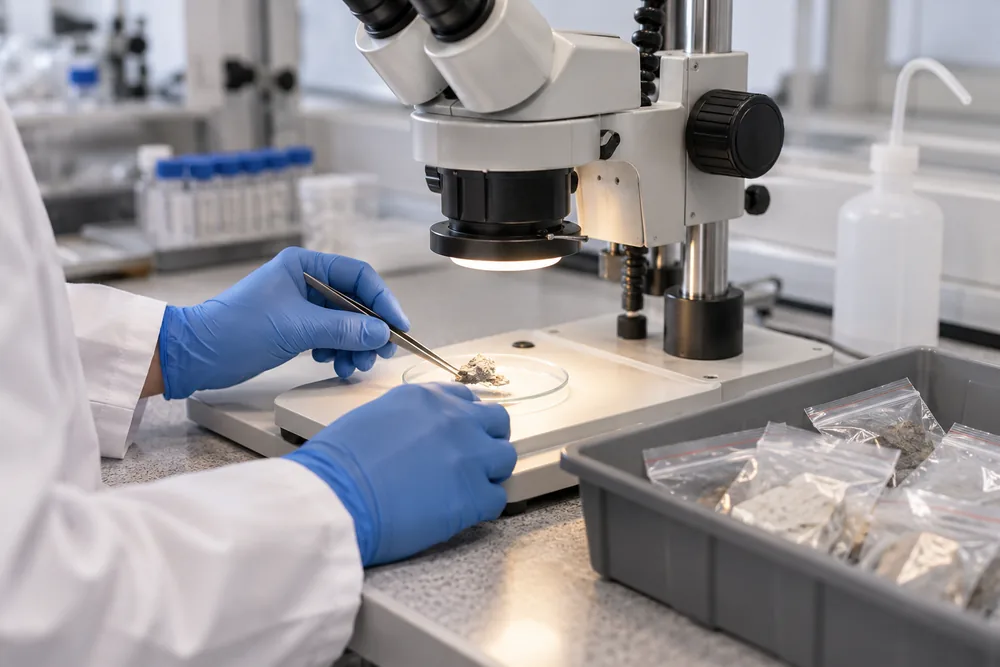
A Material Result With A Clear Location
An asbestos bulk sample tests a piece of suspect material rather than the air in the room. It can help resolve uncertainty about a particular ceiling panel, floor finish, board or other accessible product. The sample must be collected safely and be representative of the material under investigation.
A laboratory result is most useful when the sample reference connects to a photograph and exact location. Record which layer was sampled and the limits of that decision. A result from one room cannot automatically be applied to similar-looking material elsewhere, particularly where repairs or different installation phases have changed the construction.
Do Not Rely On Appearance
Colour, texture and a photograph cannot reliably establish whether a material contains asbestos. Products can look alike while having different compositions. Send a description and an existing report if available, but leave the material undisturbed until a competent person has assessed how sampling can be done safely.
Do not break, drill or scrape suspect material to prepare an enquiry. If something has already been damaged, stop the affected work and prevent access to the immediate area. Explain the incident when asking for help so the response can address the possible disturbance as well as the identification question.
Laboratory Standards Matter
HSE guidance on asbestos analysis states that laboratories used for asbestos analysis must have UKAS accreditation to ISO/IEC 17025. Check that the laboratory’s current accreditation scope covers the work requested. Sampling competence is also important because collecting the material can itself release fibres.
HSE’s HSG248 guidance for asbestos analysts covers analytical practice. The Control of Asbestos Regulations 2012 provides the wider legal context for identification and controlling exposure. Testing does not remove a dutyholder’s responsibility to manage known or presumed materials and communicate findings to those who might disturb them.
Understand Positive And Negative Results
A positive result identifies asbestos in the submitted sample. The next action depends on the product, condition, location and proposed activity. It may involve management in place, further investigation or a removal scope, rather than an automatic instruction to remove everything that looks similar.
A result with no asbestos detected relates to the submitted sample and the method used. It does not certify the whole premises as asbestos-free or cover hidden construction layers. Where a project involves multiple materials, inspection and a structured survey may provide the information that isolated samples cannot.
Testing Before A Commercial Project
Targeted sampling may answer a narrow question during maintenance planning. It should not be used to reduce an intrusive refurbishment investigation to a few convenient accessible samples. The proposed work determines the evidence needed, including concealed materials and any spaces that could not be inspected.
For procurement, request the collection scope, laboratory analysis, result format and interpretation separately where appropriate. Keep the certificate with the site record and update the register if the material is part of an occupied building. Share the outcome with the person authorising work before anyone resumes the task.
How The Process Works
Describe The Concern
Describe the suspect material at your Derby premises, where it sits, any damage and the work proposed nearby.
Agree Safe Sampling
A competent person assesses access and how the sample should be collected.
Analyse The Material
Use a laboratory with the required UKAS-accredited analytical scope.
Act On The Result
Link the certificate to the location and agree management or further survey needs.
What Does A Derby Sampling Quote Cover?
Testing cost depends on attendance, safe access, the number and types of materials, and the analysis required. Different layers or visibly separate installations may need individual samples. Programme requirements can also affect laboratory arrangements.
Ask what the quotation includes, such as collection, laboratory certificates and any explanation of the limits of the findings.
Your Questions, Answered
Can You Identify Asbestos From A Photograph?
Asbestos cannot reliably be identified from a photograph. A picture may help explain the location and condition for an enquiry, but analysis of a safely collected representative sample is needed to determine whether it contains asbestos. Do not scrape or break a material to get a better picture or prepare a sample yourself.
Is Asbestos Testing The Same As Air Testing?
Asbestos material testing examines a sample of a product to establish whether it contains asbestos. Air testing measures airborne fibre concentrations under defined sampling conditions. The two answer different questions.
Neither replaces a suitable building survey where the planned works could disturb unidentified materials across a wider area or inside the construction.
Does A Negative Sample Clear The Whole Building?
A negative asbestos sample does not clear the whole building. It applies to the submitted material and the laboratory examination, rather than every similar-looking product or hidden layer. Check whether sampling was representative and whether a survey is required for the wider work.
Keep the location and sampling limitations with the result.
Related Next Steps
See our Derby and nearby service areas or send the building details for a scope discussion.