Decide Whether Removal Is Needed
Asbestos in good condition that is unlikely to be disturbed can sometimes be managed in place. Removal becomes a different question where the material is damaged or the planned work will affect it. Start with the survey, sample evidence and construction specification rather than asking for removal based only on appearance.
A practical scope should identify the material, its extent and exact location. It should explain access constraints, nearby occupied areas and any services or equipment that must remain live. If the existing report has limitations, those gaps may need investigation before the contractor can price a defined method.
Licensed And Non-Licensed Work
Some asbestos work requires an HSE-licensed contractor, while other work may be non-licensed or notifiable non-licensed. HSE’s licensing guidance explains the distinctions. Classification depends on the material and the work, including condition, method and potential exposure, so a product name alone is not enough.
The Control of Asbestos Regulations 2012 governs the work assessment and exposure controls. Ask the appointed contractor to explain the category, any notification needed and the proposed plan of work. Check a licence where licensable work is proposed, rather than assuming any firm offering removal can undertake every material.
Separate Removal From Daily Site Activity
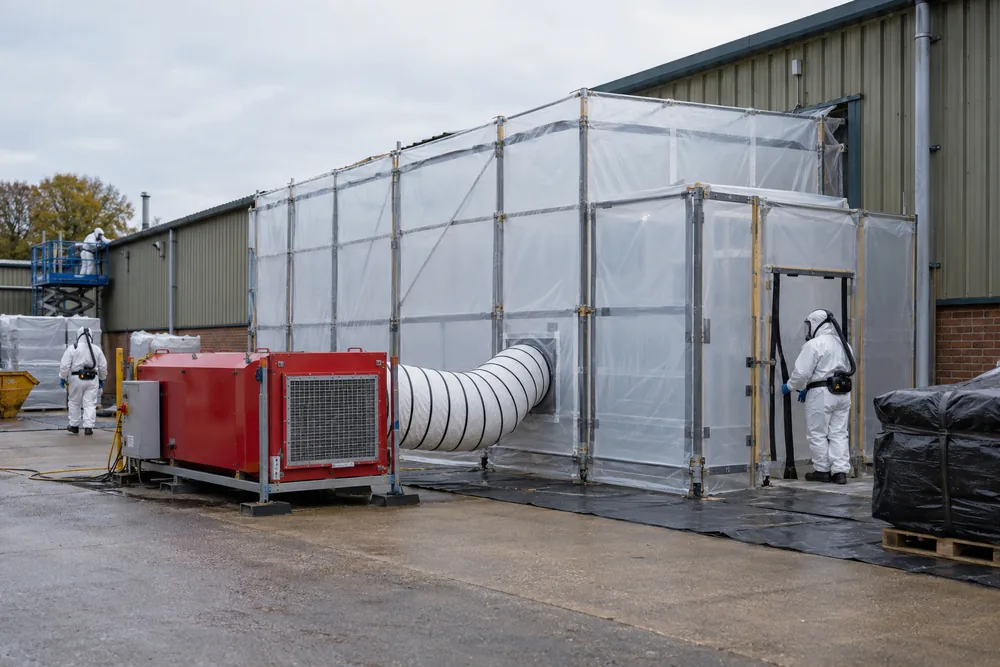
A factory or occupied office needs a clear boundary between the work area and ongoing activities. Discuss enclosure requirements, controlled access, decontamination facilities, extraction equipment and movement of waste as relevant to the method. These arrangements should be settled before setting a start date.
The programme may depend on service isolation, access equipment, notifications and analytical attendance. Coordinate with facilities staff and other trades so no one opens adjacent construction or interferes with controls. A removal job is not finished simply because the visible material has been taken away.
Waste Must Follow A Documented Route
Asbestos waste needs suitable containment and disposal through an authorised route. GOV.UK hazardous-waste guidance explains the waste holder’s responsibilities, including using authorised businesses and appropriate records. Confirm carrier registration and that the receiving facility is permitted to accept the waste involved.
Agree who supplies the waste consignment documentation and how it will be linked to your site. Keep those records with the removal scope and completion information. Do not treat an ordinary skip booking as an asbestos disposal arrangement or move suspect waste around the premises while waiting for a quotation.
Define Handback Before The Job Starts
For relevant licensed removal work, independent analytical clearance includes a staged assessment and air testing before a certificate for reoccupation is issued. Ask how the analyst will be appointed and what access or facilities are needed. Other work categories still require suitable completion checks appropriate to the task.
At handback, collect the agreed completion records, analytical documents where required and waste records. Update the asbestos register and management plan to reflect what was actually removed, retained or still inaccessible. The next contractor needs current information rather than an old survey marked with an informal note.
How The Process Works
Review The Survey
Use confirmed material information and resolve gaps in the proposed work area.
Agree The Method
Establish work classification, controls, notifications and site arrangements.
Carry Out Controlled Work
Use a contractor competent and licensed where required for the defined task.
Record The Handback
Collect clearance where required, completion evidence and waste documentation.
What Changes The Price Of Removal In Derby?
Removal cost varies with the product, quantity, condition, location and work category. Enclosures, decontamination, licensed working, access equipment, waste volumes and independent clearance can all change the scope. Send the survey and drawings, and request a quotation separating enabling works, removal, analytical requirements, waste disposal and any reinstatement that is included.
Your Questions, Answered
Does All Asbestos Need To Be Removed?
Asbestos does not always need to be removed. Material in good condition that is unlikely to be disturbed may be managed in place under suitable controls. Damaged material or planned intrusive work can change that decision.
Use the survey, condition assessment and proposed activity to decide whether management, repair or removal is appropriate.
Does Asbestos Removal Always Need A Licence?
Asbestos removal does not always need a licence, but higher-risk work must be undertaken by an HSE-licensed contractor. Some non-licensed work is still notifiable and has extra requirements. The classification depends on the material, its condition and how the task will be carried out.
Ask the contractor to explain the assessment in writing.
What Records Should Follow Asbestos Removal?
Asbestos removal records should reflect the scope and work category. Request completion details, waste consignment records and independent clearance documentation where required. Confirm any retained materials and remaining restrictions.
The dutyholder should then update the register and management plan, and provide current information to contractors before other activities restart in the affected area.
Related Next Steps
See our Derby and nearby service areas or send the building details for a scope discussion.