Start With The Actual Work Specification
The scope should describe what will be altered or removed, rather than only naming a room. Removing a suspended ceiling, lifting floor finishes and chasing a new service route can each expose different layers. Drawings, schedules and photographs help identify where an intrusive investigation needs to reach.
For partial refurbishment, the investigation can be targeted to the affected area and associated service routes. A demolition survey needs to address the structure being demolished. Include roof spaces, plant, outbuildings and external elements where they form part of the planned works, rather than assuming the main floor plan covers everything.
Intrusive Inspection Needs A Vacant Work Area
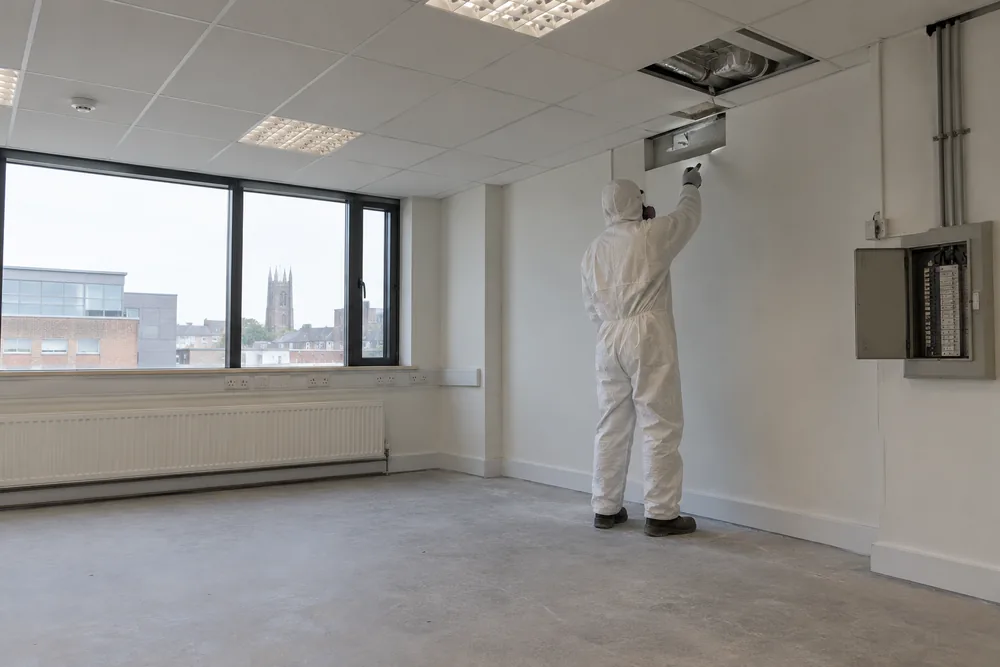
This survey can involve opening construction layers to reach concealed materials. The relevant area must be vacated, and the access plan should address isolations, stability, working at height and separation from neighbouring occupied space. Staff should not be working alongside intrusive asbestos investigation.
Agree the extent of opening up and any making-good responsibilities before the visit. A survey is an investigation, and it may leave finishes disturbed within the authorised scope. Where part of the construction cannot safely be reached, the limitation needs a specific resolution before later work exposes it.
HSG264 And The Identification Duty
HSE’s refurbishment and demolition guidance explains the need to identify hidden materials before structural work begins. HSG264 sets out the survey approach. Regulation 5 of the Control of Asbestos Regulations 2012 requires employers to identify the presence and type of asbestos, or assume it is present, before relevant work.
A survey report should be available early enough to inform construction planning, removal scopes and contractor instructions. Booking it after strip-out has started can put people at risk and leave the project waiting for further investigation. The survey boundary needs to follow the project boundary when designs change.
What The Report Should Tell The Project Team
The report should connect asbestos findings to locations within the works, using drawings, photographs and sample references as appropriate. It should also identify uninspected areas and any presumed materials. Read those restrictions with the project manager rather than treating a delivered report as automatic clearance to proceed.
Findings can inform a removal specification, sequencing decisions and information issued to other contractors. The surveyor should confirm the surveyed area is fit for reoccupation after the investigation. That handback relates to the survey work and does not certify that a subsequent removal project has passed its own clearance requirements.
Coordinate Survey And Remedial Work
If the report identifies materials that will be disturbed, establish whether the work must be carried out by a licensed contractor and what notification or clearance arrangements apply. The material type alone is not the only factor. Condition, method and expected exposure affect the work classification.
Keep the survey, laboratory results and later removal records together in the project information. If hidden construction is discovered outside the agreed investigation, pause the affected work and arrange a competent review. A change in route or extent can create a new survey requirement even within the same building.
How The Process Works
Map The Works
Provide drawings, demolition boundaries and the construction tasks proposed.
Prepare The Area
Vacate the affected spaces and agree isolations, access and opening up.
Investigate The Fabric
Inspect the specified construction layers and sample suspect materials safely.
Resolve Before Starting
Review findings and restrictions, then plan removal or further investigation.
What Goes Into An Intrusive Survey Quote?
Cost is shaped by the depth and extent of intrusion, building construction, access equipment, services isolation and the number of phases. A targeted service route needs a different scope from whole-building demolition. Making good and specialist enabling works should be discussed explicitly.
Send the works specification and proposed programme for a quotation tied to the actual investigation.
Your Questions, Answered
Can A Refurbishment Survey Cover One Room?
A refurbishment survey can cover one room or a defined work area when that matches the project. The scope still needs to follow every affected construction layer and service route. Work extending beyond the surveyed boundary must be reviewed.
Describe the actual alterations rather than requesting a room survey without a specification.
Must The Building Be Empty For A Demolition Survey?
A demolition survey requires the area being investigated to be vacated because intrusive inspection can disturb asbestos. The safety arrangements depend on the site and the planned access. Occupied adjacent areas need suitable separation.
Agree a formal survey boundary, isolation plan and reoccupation arrangements with the surveyor before attendance.
Does The Survey Include Asbestos Removal?
A refurbishment or demolition survey identifies materials and informs decisions about removal. Removal is a separate scope with its own risk assessment, work methods and possible licensing, notification and clearance requirements. Ask for each stage to be stated clearly in the quotation so the project programme includes all necessary preparation and handback steps.
Related Next Steps
See our Derby and nearby service areas or send the building details for a scope discussion.